WHAT IT IS
An audit against a document, not an opinion
Most spreadsheet reviews produce commentary. The structure could be cleaner, the formulas could be simpler, somebody should add validation. None of that tells you whether the file is producing the right numbers.
An audit here means one thing. You name the document the workbook is meant to agree with, and every figure it produces is compared against that document, one figure at a time, with each comparison written down. What comes back is a list of the places where the file and the source disagree, and the evidence for each.
The question is not whether the file is tidy. It is whether the number is the number.
WHAT YOU SEND
What I need from you
Three things, and the third is the one people forget.
- The workbook in the state it is actually used, not a cut-down copy made for the review.
- The source document its figures are meant to agree with, including the edition and the date of the version in force for the period the file covers.
- Which outputs decisions are made on. A workbook holds thousands of cells and a handful of numbers somebody acts on. Those get reconciled first.
WHAT COMES BACK
The log and the findings
If part of the file has no source — a figure someone typed in and nobody can place — that is said at the start. Unsourced figures are reported as unsourced, which is a finding in itself.
- A reconciliation log with a row for each figure checked: cell, produced value, source value, the source's title, page reference and date, and match or mismatch with the difference.
- A findings list, each entry written so it can be verified without me.
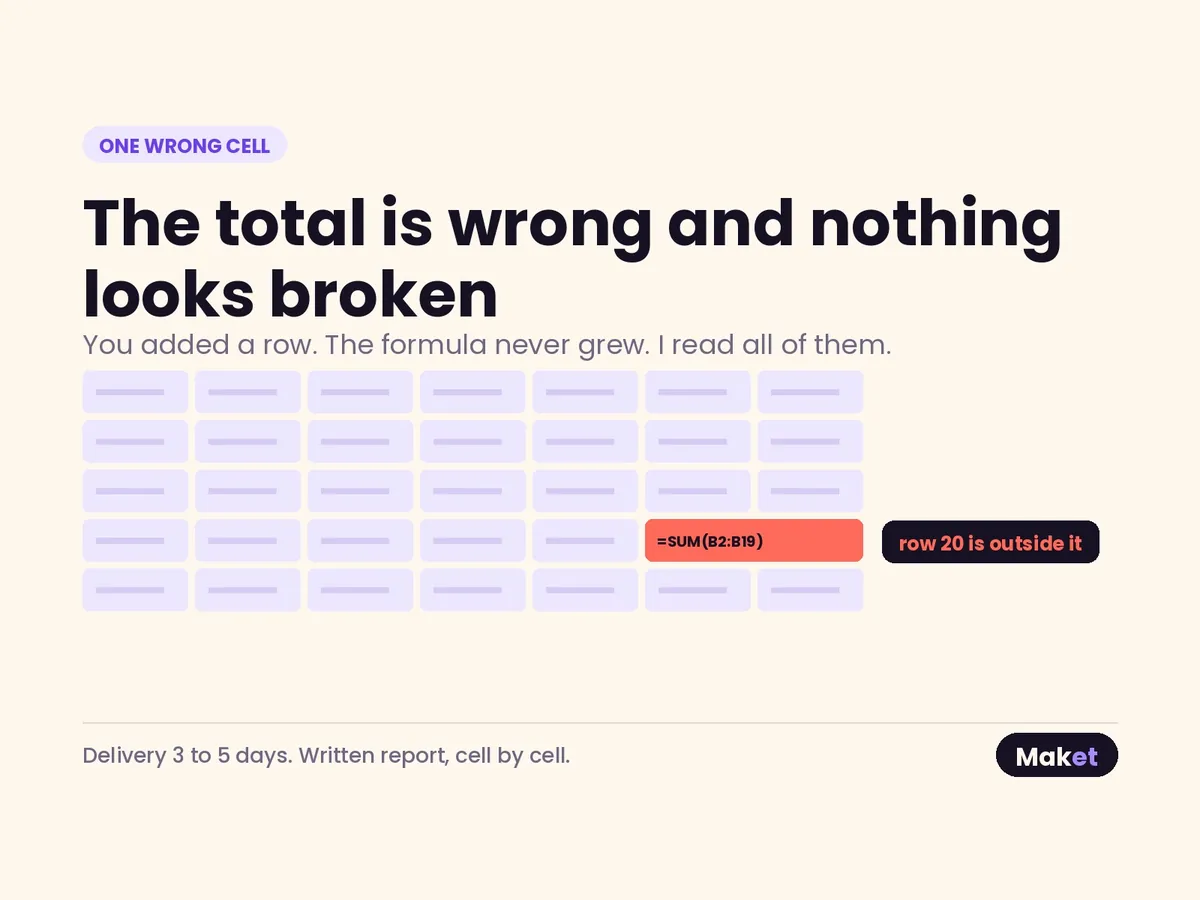
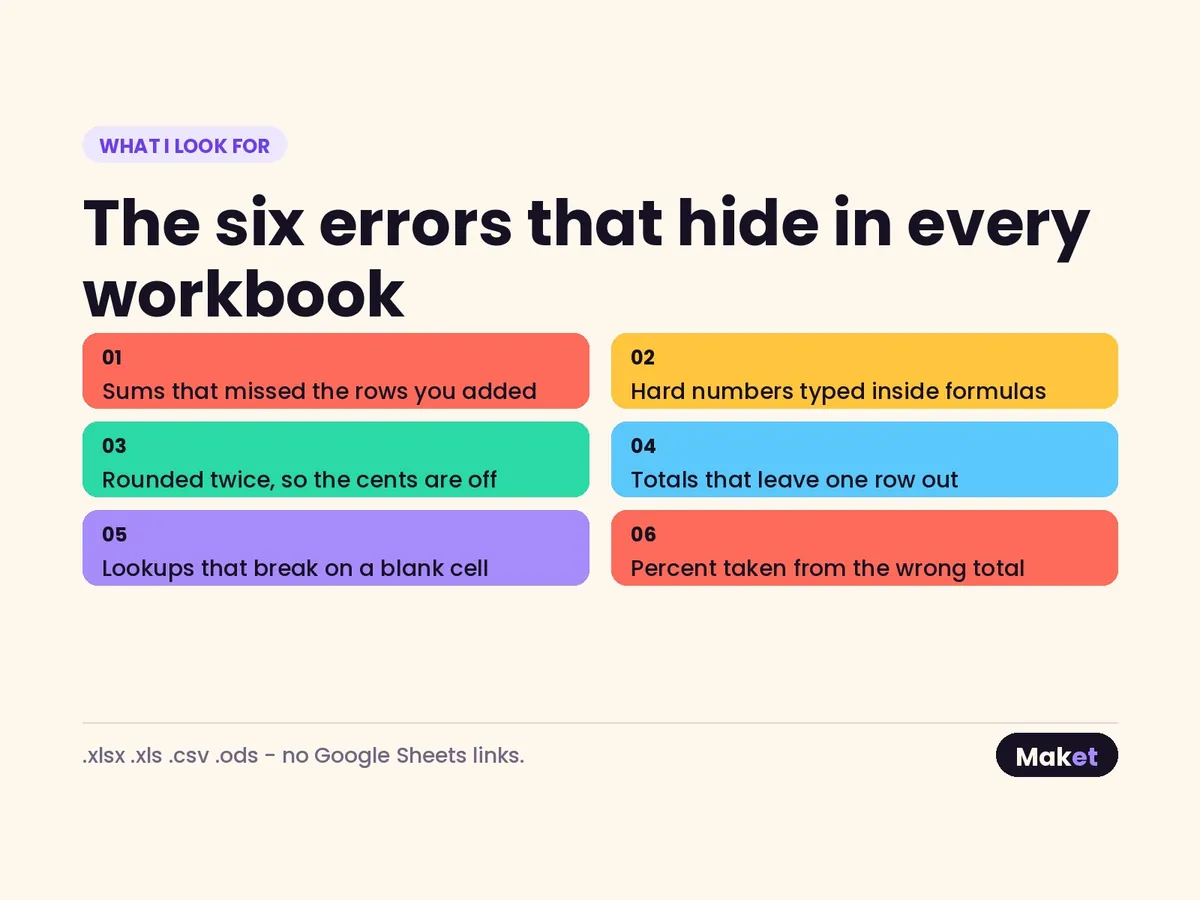
- The cause of each finding named in plain language: a bracket boundary off by one row, a rounding rule that does not match the source, a hard-coded value sitting where a formula used to be, a range that stopped growing when rows were added.
- The unsourced figures, listed separately.
PROOF
How a finding is proved rather than asserted
A finding that says this looks wrong is worth nothing in a meeting. Every finding is written to survive being challenged by the person who built the file.
So it names the exact cell, quotes the value the workbook produces, quotes the value the source states, gives the page and the edition date, and shows the arithmetic in between wherever the figure is derived rather than quoted. Anyone who disagrees can open the same document and check. Sometimes they do, and sometimes the source I was handed was not the version in force, which is why edition and date sit in every line.
Coverage is stated too. Where a section was reconciled in full, the log says so. Where something fell outside scope, that is written down rather than left to be assumed.
AI
AI is in the process, and that is the argument for the log
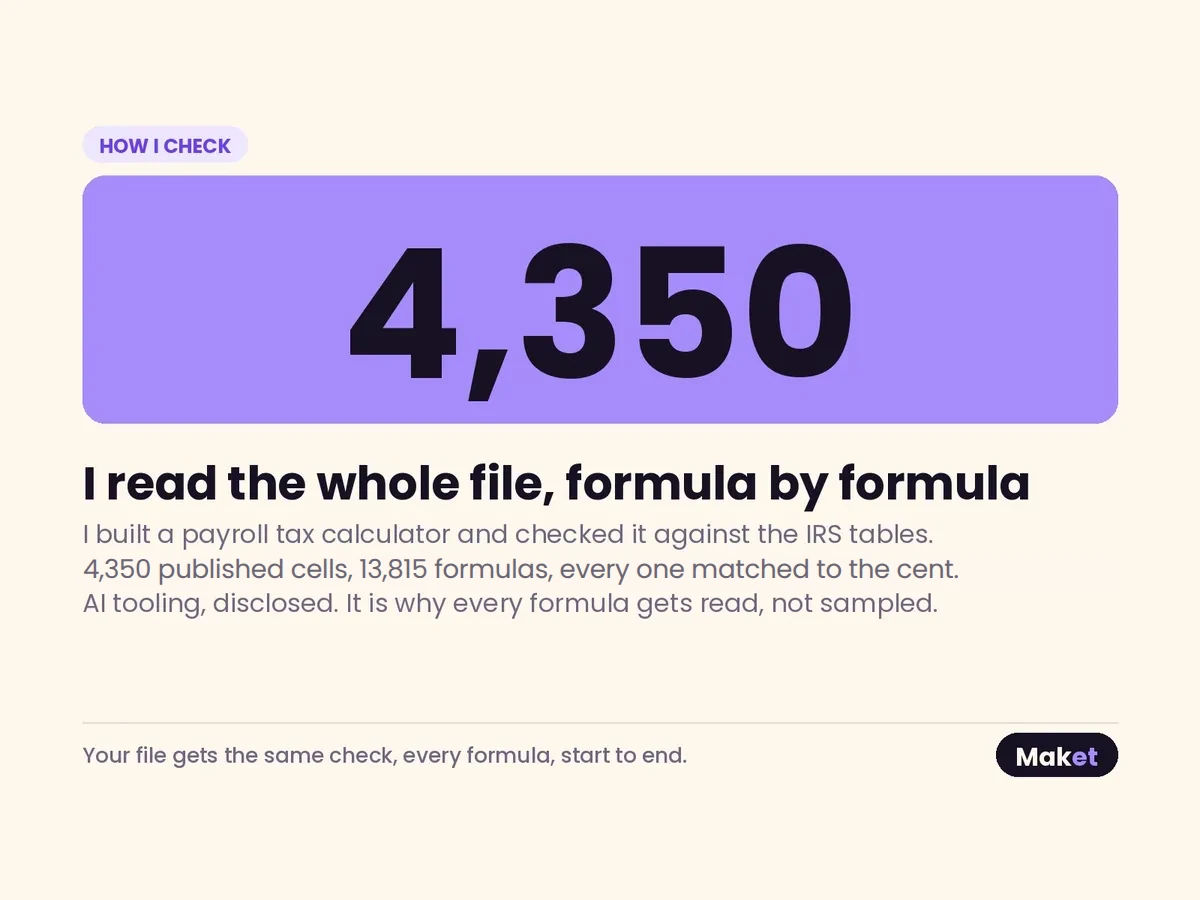
I use AI tooling in this work and say so plainly. It reads formulas fast and it is good at spotting the shape of a mistake in a large file.
It also produces confident arithmetic that is wrong: a rate close to the published one, a threshold that sounds correct. So no finding rests on what a model said. Each one is confirmed against the source document and recorded with page and date, the same standard I apply to my own hand calculations. What you receive is checkable line by line, which is the only version of this worth paying for.
THE FIX
Findings on every tier, the corrected file on two of them
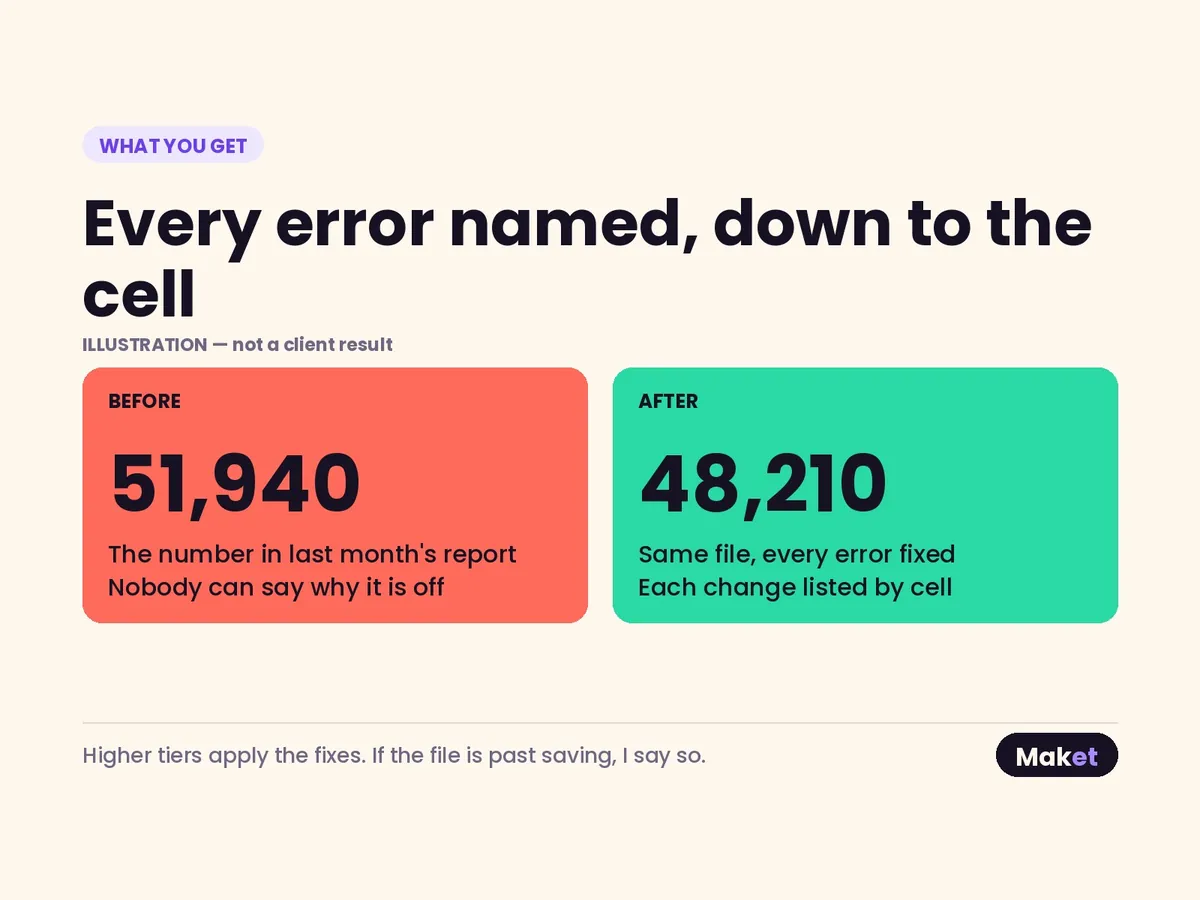
Every tier delivers the same evidence: the log, the findings, and the cause of each one written plainly.
On the Standard and Advanced tiers the corrected workbook comes back with it. That matters more than it sounds — a fix you can place beside the original is a fix you can argue with. A file that simply arrives “fixed” is one more thing to take on trust, which is the problem this is meant to solve.